Showing posts with label energy. Show all posts

Saturday, November 27, 2021

"The enemy gets a vote"

By Donald Sensing


Way back in the last millennium when I wrote or helped write operations plans for the US Army, I always remembered a catch phrase we planners had used for a long time: "The enemy gets a vote."
Which is to say that when we acted, the enemy reacted and almost immediately the plan's assumptions would be negated. That's why we also said, "No battle plan ever survives contact with the enemy." Dwight D. Eisenhower put it this way: "Planning is absolutely essential, but plans are useless."
And so we come to this administration trying to manage the world's oil supply. Bureaucrats' plans bear all the hallmarks of "static analysis," when planners assume there is only one variable and that they can control it, and nothing else changes and the result is always unicorns and rainbows. This is, ahem, especially true under Democrat administrations, and nowhere more in evidence than the current administration's energy policy, headed by a publicly inept Secretary of Energy who admitted on camera that she has no idea how much oil the United States uses per day.
She also said that the Biden administration cannot do anything to bring oil prices down because oil prices are "controlled" by OPEC.
But don't worry because President Biden has announced that OPEC should increase production and that he is ordering 50 million barrels of oil to be released from the US Strategic Oil Reserves (SPR). That'll show 'em!

Here is an excerpt from the White House press release:
The U.S. Department of Energy will make available releases of 50 million barrels from the Strategic Petroleum Reserve in two ways:
32 million barrels will be an exchange over the next several months, releasing oil that will eventually return to the Strategic Petroleum Reserve in the years ahead. The exchange is a tool matched to today’s specific economic environment, where markets expect future oil prices to be lower than they are today, and helps provide relief to Americans immediately and bridge to that period of expected lower oil prices. The exchange also automatically provides for re-stocking of the Strategic Petroleum Reserve over time to meet future needs.
18 million barrels will be an acceleration into the next several months of a sale of oil that Congress had previously authorized.
That final graf means that 36 percent of the oil released will be sold to other countries, including China. The 32 million barrels released to US oil companies will take place " over the next several months." Last year, the US used just more than 18 million barrels of oil per day, but that was in a year of low economic activity. This year's figures have not been published but are certain to be significantly higher.
But using only 2020's consumption, what the White House announced is that over the next several MONTHs the administration will add a grand total of 1-2/3 days of oil to the American market. Wow!
But wait! There's more! I gotcher proof that static analysis is useless rat cheer! OPEC decided it gets a vote! Hey, where did they get that idea?
The administration said that it would release 32M barrels to the US economy over time, expecting it to drive down oil prices, then purchase 32M barrels for the SPR at lower prices than today's. (India and Japan also said they would release oil from their national reserves.)
So OPEC plus Russia basically said, "Lower prices later? Nope, not a chance. We will simply cut production by at least an equal amount that you are releasing."
Who could not have seen this coming? Only this White House and its Secretary of Energy.
Bookmark and Share

Sunday, March 22, 2020

Why we can't afford 99-cent gasoline

By Donald Sensing

If you like the very low gasoline prices, even though we are not supposed to drive anywhere, get used to it. Oil's spot price may drop some more, yes (it plummeted today after Thursday's highest-rate increase ever in one day). But production is going to drop. Usually, that means gas prices rise. Not this time. And that is actually very bad news.

Cheap gas and nowhere to go. That's bad.
American oil frackers operate at a loss much below $60 per barrel (depending where they are located). The largest such operation, the Permian Basin, needs about $65 per barrel to make a profit. It straddles Texas and New Mexico.

The drop in oil price was triggered by Russia's refusal to cut production at the Saudis' request. So the Saudis jacked production up to drive the price down and punish the Russians. Well, good luck with that:
After oil prices collapsed in the worst drop in nearly three decades—courtesy of the renewed Saudi-Russia rivalry on the oil market – Russia’s Finance Ministry said on Monday that Moscow had enough resources to cover budget shortfalls amid oil prices at $25-30 a barrel for six to ten years.  
Not coincidentally, both the Saudis and the Russians would like to see America's frackers permanently closed and the United States to return to a major importer of oil, not net exporters as we are right now.

One way or another oil prices will rise. That seems a cloud but actually it is the silver lining. The cloud is cheap oil. Active-rig counts fell this week in the US by 160, year over year, to 722. On the other hand, US oil production remains near an all-time high at 13.1 million barrels per day. Go figure.

And next month may be even more dramatic.
Analysts say that the month of April could see the largest supply overhang in the history of the oil market.

“We now expect the y/y demand loss to peak in April at 10.4 million barrels per day (mb/d), and annual demand to fall by a record 3.39mb/d in 2020,” Standard Chartered wrote in a note.

In the short run, the oil market surplus could reach a peak of 13.7 mb/d in April, Standard Chartered said, with an average surplus of 12.9 mb/d for the second quarter. The inventory buildup could reach a gargantuan 2.1 billion barrels by the end of the year, “stretching the midstream of the industry to its limits,” the bank wrote. That figure represents an upward revision of 50 percent from the 1.4-billion-barrel inventory surplus the bank predicted…just a week ago.

Other analysts have even more dramatic scenarios. Eurasia Group says demand could fall by as much as 25 mb/d in the next few weeks and months. The historic glut means that the world could run out of storage space. “The combination of weakening demand and excess supply is hardly going to be accommodated by onshore storage,” Giovanni Serio, head of analysis at Vitol, told the FT. “At a certain point…we will need to fill all the boats.”
 So severe is the situation that for practically the first time in long memory, "Texas Weighs Curtailing Oil Production for First Time in Decades."

Texas regulators are considering curtailing oil production in America’s largest oil-producing state, something they haven’t done in decades, people familiar with the matter said.

Several oil executives have reached out to members of the Texas Railroad Commission, which regulates the industry, requesting relief following an oil-price crash, the people said. U.S. benchmark oil closed around $25 a barrel Thursday.

Texas, which hasn’t limited production since the 1970s, was a model for the Organization of the Petroleum Exporting Countries, which has sought to control world-wide oil prices in recent decades. OPEC and Russia were unable to reach a deal on reducing output in response to the coronavirus pandemic, which helped trigger the current collapse in prices.

It is unclear whether regulators will ultimately act to curtail production, but staffers are examining what would be required in such an event, the people said.
Oil prices have always been manipulated by producers. Even so, at the end of the day, demand has always been in control. And now the worldwide demand has dropped like an anvil and will continue to do so. The largest users of petro products - shipping and aviation - are harboring vessels and canceling flights. That will likely accelerate.

That said, oil production is going to plummet because, as stated above, we are running out of places to put it. That does not mean that gas prices will suddenly rise. The huge over-supply will see to that. But cheap gas prices are not going to offset the real pain dropping demand will cause: higher unemployment not only of oil-industry workers, but businesses whose revenues depend on customers using oil just to buy or get to their products or locations, such as hotels, tourist attractions, airline workers, dock workers, gas station owners and workers, the list is very long.

I am not an economist by a long shot, but unless we stop our "insane over-reaction," there is going to be a lot of pain to come that 99-cent gasoline will not pay for.

Update: How low can it go? "How Low Can Oil Go? One Forecast Sees $5 a Barrel." Which means that gasoline will be not much higher than free - and yet it will be also more difficult to find because gas stations will be closing at accelerated rates as oil prices plummet.

Bookmark and Share

Tuesday, June 11, 2019

Electric cars pollute more than diesel

By Donald Sensing

So says the University of Cologne as reported by The Brussels Times, Belgium: "Electric vehicles emit more CO2 than diesel ones, German study shows."

Electrics' killer? Life-cycle pollution, compared to diesel cars - what it takes industrially to obtain the raw materials and turn them into finished, operating vehicles, operate them during their life span, and dispose of them when the reach the end. And the core of the problem is batteries.

When CO2 emissions linked to the production of batteries and the German energy mix – in which coal still plays an important role – are taken into consideration, electric vehicles emit 11% to 28% more than their diesel counterparts, according to the study, presented on Wednesday at the Ifo Institute in Munich.

Mining and processing the lithium, cobalt and manganese used for batteries consume a great deal of energy. A Tesla Model 3 battery, for example, represents between 11 and 15 tonnes of CO2. Given a lifetime of 10 years and an annual travel distance of 15,000 kilometres, this translates into 73 to 98 grams of CO2 per kilometre, scientists Christoph Buchal, Hans-Dieter Karl and Hans-Werner Sinn noted in their study.

The CO2 given off to produce the electricity that powers such vehicles also needs to be factored in, they say.

When all these factors are considered, each Tesla emits 156 to 180 grams of CO2 per kilometre, which is more than a comparable diesel vehicle produced by the German company Mercedes, for example.

The German researchers, therefore, take issue with the fact that European officials view electric vehicles as zero-emission ones. They note further that the EU target of 59 grams of CO2 per km by 2030 corresponds to a “technically unrealistic” consumption of 2.2 litres of diesel or 2.6 litres of gas per 100 kms.

These new limits pressure German and other European car manufacturers into switching massively to electric vehicles whereas, the researchers feel, it would have been preferable to opt for methane engines, “whose emissions are one-third less than those of diesel motors.”
ZeroHedge explains:
A battery pack for a Tesla Model 3 pollutes the climate with 11 to 15 tonnes of CO2. Each battery pack has a lifespan of approximately ten years and total mileage of 94,000, would mean 73 to 98 grams of CO2 per kilometer (116 to 156 grams of CO2 per mile), Buchal said. Add to this the CO2 emissions of the electricity from powerplants that power such vehicles, and the actual Tesla emissions could be between 156 to 180 grams of CO2 per kilometer (249 and 289 grams of CO2 per mile).
An electric car such as a Tesla is not powered by electricity. It is powered by coal; the electricity is just a means of transfer.


The same problem, btw, exists in the nearly-mythical hydrogen-powered car. The hydrogen has to come from somewhere. Atoms of H It do not exist in nature unbound to other elements. And you always use more energy to obtain free hydrogen than you get from oxidizing it. Guess where that energy comes from?

I covered hydrogen's problems years ago in, "Buy a Honda, kill a polar bear."

Here is a good video that explains hydrogen's potential advantages but very present difficulties very well.


And then there's this:
 
GAO: "Biofuels Don't Lower Gas Price or Emissions" But biofuels give so much political mileage that this report will disappear without a sound.

Bookmark and Share

Monday, April 29, 2019

Bill Gates vs. Green New Deal

By Donald Sensing

It's only two minutes long.


HT: Gerard

Bookmark and Share

Friday, September 1, 2017

Coming: Pain at the pump

By Donald Sensing

Largest US refinery Motiva may be shut up to two weeks

Motiva Enterprises' Port Arthur, Texas refinery, the nation's largest, may be shut as long as two weeks for assessment of the plant and repair of any damage, sources familiar with plant operations said on Thursday.

The 603,000 barrel per day (bpd) Port Arthur Refinery was shut on Wednesday due to flooding from Tropical Storm Harvey.

In a statement to CNBC, Motiva said it "cannot provide a timeline for restart at this time." The oil company says it will begin assessing the refinery "as soon as the local area flooding has receded," although Motive is uncertain about how long it will take for floodwaters to diminish.
The refinery has seen better days:


BTW, the refinery is owned by Saudi Arabia, which took full control in May.

Bookmark and Share

Thursday, June 29, 2017

Dueling oil reporting

By Donald Sensing

From my Google news feed this morning, dueling headlines about oil prices:


I wonder whether CNN Money thinks that the "worst" for oil prices is a low price or a high one? Let's take a look!
Crude oil prices plunged to $42 a barrel last week, sinking into a bear market amid renewed concerns about a massive supply glut that just won't go away. Some even feared a return to the sub-$30 prices that spooked global investors early in 2016.

But there are signs that the notoriously-moody oil market may have gotten a bit too pessimistic. After crashing more than 10% in June, crude prices have rallied four straight days to climb back above $44 a barrel.
There you have it. In CNN's mind, the "worst" thing that can happen to oil prices is that they fall and give us cheap energy.

Anyway, once again, what Warren Buffet said about stock-price forecasting (and by extension, commodities pricing) is verified.


Bookmark and Share

Thursday, March 9, 2017

The purpose of economic forecasts

By Donald Sensing


Last Dec. 17: "Expect Oil Prices To Spike To $60 In Q1, But Then Crash Again" After reciting all the reasons that the OPEC production cut will not have much of an effect on oil supply or prices, the article says,
However, in the first quarter, we expect crude oil prices to trade higher to $60 a barrel, as news of the OPEC nations maintaining their quotas will provide a temporary boost. These higher levels are unlikely to be sustained, though.
So we turn to oilprice.com where we see this chart for Brent crude (which sells at higher prices than most other sources):


The high-low-last-change numbers at the top are the current trading session, I grabbed this chart and the WTI chart below about five minutes after market open here in the US.

Brent's highest closing price so far this year was $56.71 on Jan 3. Here is WTI crude. It's 23017 high was $54.12 also on Jan. 3.


Back to the original December forecast:
On the downside, the floor for crude oil prices is $52, $44 and $36 per barrel levels. After the initial jump, crude is likely to trade below $52 a barrel for most of the second half of 2017.
Well, oil has already met the sub-$52 target. Maybe that's why "OPEC Offers Olive Branch To U.S. Shale." Shale extractionm especially in the US, is what has kept oil prices from soaring since OPEC announced deep production cuts in 4Q 2016 that took effect on Jan. 1. Key sentence:
The supply reduction of 1.2 million barrels per day, plus almost 0.6 mb/d from non-OPEC countries, is helping to bring down global inventories, but at a surprisingly slow pace. The comeback of U.S. shale is undermining the effectiveness of the deal.
Yep. And the oil price at which shale becomes profitable j keeps dropping, too. I explained (somewhat) the economics of shale extraction in "Nuking shale will make fracking obsolete," which also covers the impact of microwave, waterless technology on the industry.

Update: Petroleum geologist Arthur E. Berman wrote after trading closed today,
WTI futures fell $2.86 from $53.14 to $50.28 per barrel, and Brent futures dropped $3.81 from $55.92 to $52.11 per barrel. WTI is trading below $49 and Brent below $52 per barrel at the time of writing.

The apparent cause was a larger-than-expected 8.2 million-barrel (mmb) addition to U.S. crude oil inventories.

Based on history, we can see that this was an over-reaction. WTI has fallen below the $50 to $55 per barrel range in which oil futures have traded for the last 3 months.
 
An 8.2 mmb addition to crude oil storage is actually fairly normal during the annual re-stocking season that we are in now (Figure 2). Inventories increased 10.4 mmb during this week in 2016 and the 5-year average for this date is 5.3 mmb.

The fact that inventories have been in record territory since the beginning of 2015 has not kept oil futures from going through several rallies or from trading near $55 per barrel since November. 
Well, I can economic forecast with the best (or worst, can't really tell the difference) of them, so here goes:

The US Oil Fund (USO, an ETF surrogate for tracking crude price movements) opened today at $10.58 per share, down about 9 cents from Wednesday's close of 10.675. After dropping to 10.32, USO rallied in the afternoon to close today at 10.53.

I predict that crude will rise in price tomorrow, but not to its prior level of only last Tuesday. USO will top out no higher than $11.00 or a few cents more, then we'll see sideways burbling for awhile as the markets and speculators try to find the new normal. I think that WTI will finally plateau for awhile at about $50.50 and Brent at about $53. But my time frame extends no further than the end of next week.

Disclosure: I am not invested in USO so don't take any of this as advice. The oil markets just happen to fascinate me for some reason. It's just a hobby.

Bookmark and Share

Thursday, January 5, 2017

“It's tough to make predictions, especially about the future.”

By Donald Sensing

Give It Up: Forecasting Oil Prices Is Impossible


Just as that great market analyst Yogi Berra said . . .

Bookmark and Share

Friday, December 9, 2016

Nuking shale will make fracking obsolete

By Donald Sensing

Nuke that shale oil!

Producers would microwave oil shale formations with a beam as powerful as 500 household microwave ovens, cooking the kerogen and releasing the oil. It also would turn the water found naturally in the deposits to steam, which would help push the oil to the wellbore. “Once you remove the oil and water,” Kearl continues, “the rock basically becomes transparent” to the microwave beam, which can then penetrate outward farther and farther, up to about 80 feet from the wellbore. It doesn’t sound like much, but a single microwave-stimulated well, which would be drilled in formations on average nearly 1,000 feet thick, could pump about 800,000 barrels. Qmast plans to have its first systems deployed in the field in 2017 and start producing by the end of that year.
So in another year, we may see production begin.  And even greenies would have to concede this is promising:
Fracking can slurp up to 10 million gallons of water per operation — not good, especially in the arid West. “We don’t need water for our process,” Kearl says, “and we don’t have wastewater to dispose of afterward.” In fact, microwave extraction might produce water — one barrel of water for every three barrels of oil. In situ recovery using microwaves also avoids the massive environmental impact of mining and then processing the kerogen. What’s more, natural gas that often is flared off in conventional oil-well production could be used to power the generator that creates the microwaves.
What will count strongly is whether the economics of microwave fracking can beat those of conventional fracking. And so far, it seems not:
... there’s a much bigger problem with microwaves as a means of extracting oil, and that’s money. Microwaving a piece of shale rock 1,000 feet below ground takes quite a lot of energy. Now, this energy could come from the associated gas at the well or—why not—from renewable sources. Even so, the pumping cost per well remains about $9, which is more or less the same as the pumping cost of a conventional or a fracking well. In other words, for all its benefits, the microwave approach needs higher international oil prices to become commercially viable.

Fracking today accounts for roughly five percent of oil production. But that is enough for fracking to be firmly influential in setting oil prices, which is one reason many analysts expect the Nov. 30 OPEC deal to cut production to have a much smaller effect on prices than such cuts have had before: this is the first such OPEC deal taking place within a worldwide fracking context. And fracking costs have been dropping while per-well extraction has been increasing.

Why? "Because it isn’t really a natural resource extraction method, not in its economics it’s not. Really, in its economics, it is a manufacturing process. As BP says:"
The key point here is that the nature of fracking is far more akin to a standardised, repeated, manufacturing-like process, rather than the oneoff, large-scale engineering projects that characterise many conventional oil projects. The same rigs are used to drill multiple wells using the same processes in similar locations. And, as with many repeated manufacturing processes, fracking is generating strong productivity gains.

As you know, the strength of manufacturing productivity has led to a trend decline in the prices of goods relative to services. A fascinating question raised by fracking – and its manufacturing-type characteristics – is whether it will have the same impact on the relative price of oil. A key issue here is whether these types of repeated, standardised processes can be applied outside of the US and to more conventional types of production. Can the discipline of lean manufacturing be applied to conventional oil operations?
But fracking, whether conventional or microwave, has a flexibility advantage over traditional pumping. Compared to pump wells, fracking wells can be set up much quicker and typically run for only a year or two and then either shut down or get moved. This makes fracking both more responsive to and affected less by market price elasticity. That is, fracking wells can be put into production quickly when oil prices support production profitability (responsiveness) and when prices fall below, they can be simply run until they're dry, which won't be long anyway, then shut down (less effect).

Bookmark and Share

Tuesday, December 6, 2016

The oil bump didn't last long

By Donald Sensing

Oil prices blasted off Nov. 30 after OPEC announced a deal among its members to cut production by 1.2 million barrels per day, with another 300,000 pledged by Russia and another 300,000 being sought from other non-OPEC producers.

Oil spiked upward in double-digit percentages, even though the deal does not kick in until Jnaury. Well, of course, because oil buying is a futures market - buyers bid on contracts now for delivery later. Three months is a typical period. That's how the commodities markets work.

Yesterday oil began to slide in price. This was inevitable since like any commodities market, that of oil is traded heavily by speculators who do not want to buy physical oil at all, they just want to leverage money. So speculators started taking profits and that drove prices down. (There is a deadline date that closes contracts, and if you still hold an active contract the day after, you are going to buy 1,000 barrels of oil no matter what, or 42,000 gallons. Hope you have somewhere to put it!)

But did prices decline for other reasons, too? Here is the chart since Nov 29 for an ETF called USO, used as a proxy for oil contracts since USO's share price matches oil contract's price moves on a 1:1 ratio:


As the market has not opened as I type this, the pre-market price shows a further decline.

Was the decline due to things other than profit taking?
But on Monday, a Reuters survey found that OPEC's output hit a record high in November, indicating that member countries could have a hard time sticking to their plan.

"We remain skeptical of Iraqi and Iranian compliance," said Michael Cohen, head of energy commodities research at Barclays, in a note Monday.
"OPEC export levels may remain elevated in 1H 17 if countries step on the gas in December and fill their storage. Lower demand and lower refining runs should also help the Saudis keep exports high."
Note that the OPEC deal was only for production, it does not affect exports into the world market. And OPEC nations were cheating in advance by raising production and cheating after implementation. Any economist knows why. See also, "Saudi Arabia And The Great OPEC Production Cut Hoax."

Disclosure: I am not invested in oil or the oil industry in any way. Don't take anything I write as investment advice! 

Update: There are a number of analysts making the case for oil to go much higher and generally remain there:

The Oil Deal: Pay Attention Because The Game Just Started

Oil Prices Doubled The Last Time OPEC Cut Production

And finally, nine bearish factors that will drive prices down

UpdateIran Brags It Can Now Sell As Much Oil As It Wants

Bookmark and Share

Monday, December 5, 2016

OPEC and the tragedy of the commons - why its members will cheat

By Donald Sensing

This is OPEC's basic problem and it has no solution
US opening-market oil prices are presently up from Friday's close, although prices dropped about one percent over the weekend in Asian markets after the US rig count showed a net gain. Brent oil futures have topped $55 per barrel, its highest level in 18 months.

The bull market for oil is still resounding from OPEC's Nov. 30 deal to cut production by 1.2 million barrels per day. OPEC is also seeking another 600,000-bpd cut by non-OPEC countries, with half coming from Russia. Russia has already said it would and by the end of Dec. 10 we should know whether other non-OPEC producers will meet the goal.

But here's the thing: oil production both in and out of OPEC is already at near all-time highs and has been rising since summer. OPEC and other producers have been running production up preparing for a deal to run it part-way down.

Example:
Russia on Friday reported average daily oil production of 11.21 million bpd for November - its highest in almost 30 years.

And while Moscow has agreed to cut its output by 300,000 bpd in early 2017, it said it would do so against November levels. That means that even after a reduction, its output would remain higher than it was at the peak of the oil glut in the first half of 2016.

Jeffrey Halley of brokerage OANDA in Singapore said oil traders were "nervous (as) Russia's output has hit record levels, meaning their part of the production cut takes them back to what they were producing only quite recently". 
In the Middle East, where the deepest OPEC production cuts are expected, there are also signs that production will rise before it gets cut.

Saudi Arabia and Kuwait are expected to agree this month to resume oil production, with a potential of 300,000 barrels in daily output, from jointly operated oilfields which were shut down between 2014 and 2015 for environmental and technical difficulties.
This is cheating on the agreement in advance of when it kicks in next month. And producers' track record on keeping such agreements is really, really lousy. Brown University professor Jeff Colgan wrote in Foreign Affairs in October, after the Nov. 30 summit had been announced, that historically OPEC's deals have been meaningless:
In a detailed analysis of OPEC’s behavior since 1982, I found that OPEC cheated on its own aggregate production target a whopping 96 percent of the time—and every member is guilty of taking part. Worse still, changes in production targets had almost no impact on production itself. Maybe 2016 will be different, but this pattern cannot be ignored.

OPEC’s main problem is that it has no real way of enforcing its agreements. Members such as Algeria, Iraq, and Venezuela typically want the organization to do what cartels do: constrain oil supplies and raise world prices. But even though they understand that restraint would benefit the organization as a whole, they are not usually willing to sacrifice their own output. 
Any economist understands this almost intuitively. Its the classic "tragedy of the commons."
The tragedy of the commons is an economic problem in which every individual tries to reap the greatest benefit from a given resource. As the demand for the resource overwhelms the supply, every individual who consumes an additional unit directly harms others who can no longer enjoy the benefits. Generally, the resource of interest is easily available to all individuals; the tragedy of the commons occurs when individuals neglect the well-being of society in the pursuit of personal gain.
Understand that in the worldwide oil commons, the "given resource" is not oil, but dollars. To restate the definition:
As the demand for dollars overwhelms the supply (because of falling oil prices), every oil-producing nation that keeps producing high levels gains revenue at the expense of nations that cut production. Generally, dollars are easily available to all producers; the tragedy of the commons occurs when individual nations neglect the revenue of other producers to maximize their own revenue.
This kind of behavior is universal no matter the "given resource."
The concept and name originate in an essay written in 1833 by the Victorian economist William Forster Lloyd, who used a hypothetical example of the effects of unregulated grazing on common land (then colloquially called "the commons") in the British Isles. The concept became widely known over a century later due to an article written by the ecologist Garrett Hardin in 1968. In this context, commons is taken to mean any shared and unregulated resource such as atmosphere, oceans, rivers, fish stocks, or even an office refrigerator.
As Brown demonstrated, 96 percent of the time OPEC's members follow the commons principle quickly and readily. There is no reason to expect anything different this time except, perhaps, that cheating will occur sooner this time than before because most member states are more cash crunched than they were in prior agreements.

End note: One more thing to remember about the OPEC deal. It is an agreement to reduce oil production but is silent on oil exports.
It is also worth noting that the OPEC agreement refers only to production, not exports. The Saudis have been shipping crude from a stockpile of near 280 million barrels and will continue to meet its market commitments from those stockpiles. Cutting production by half a million barrels a day has no short-term impact on how much oil the Saudis export.

In September, for example, Saudi Arabia’s crude stocks dropped by about 2.3 million barrels, according to JODI data, and the country ended the month with 278.7 million barrels in its stockpile. 
In 2015, the latest year for which I could find figures, Saudi Arabia exported 7,163,300 bpd and produced 10,192, 600, for a net stockpile gain of three million (rounded) bpd. Some of that excess the country uses for itself, of course, but even so it has been stockpiling oil a long time. Even if Saudi Arabia cuts production by its agreed-upon rate of 500,000 bpd, it can keep exports unchanged for at least 18 months.

Update: Here are the bpd production charts of every OPEC nation, by quarter, since January 2005. Here is the overall OPEC chart:


Even at almost 34 million bpd, OPEC's share of global oil supply is less than 35 percent and shrinking. And that's before the cuts kick in next month.

Bookmark and Share

Saturday, December 3, 2016

OPEC is dead, awaiting burial

By Donald Sensing

Many analysts say that the Nov. 30 deal by OPEC nations to cut daily oil production by 1.2 million barrels per day will turn out not to be very consequential in 2017. Non-OPEC Russia, a major producer, also agreed to cut production by 300,000 bpd and another 300,000 pledge is being sought from other non-OPEC countries, making the total potential cut 1.8M bpd. The additional pledges will be gained (or not) on  Dec. 10.

What was the deal? Financial Times explains:


Let's start with Bloomberg's coverage of former Saudi oil minister Ali al-Naimi:
"The only tool they have is to constrain production," al-Naimi said of OPEC at an event in Washington, D.C. "The unfortunate part is we tend to cheat." ...

He also expressed skepticism that Russia, considered a wildcard during talks, would follow through on its promise to reduce output. "Will Russia cut 300,000?" he said. "I don’t know. In the past, they didn’t."
CNBC's Jackie DeAngelis said that "Nobody really knows at this point" whether there will be cheating.
The moves in oil prices won't really take off until we learn whether members are cheating on the deal or not, DeAngelis said. That won't be until February or March, given that the deal doesn't take effect until January.

If everyone holds to their part of the deal, then crude oil prices could break past the $60-mark, according to Goldman Sachs.
But many producers both inside and outside the cartel have already been cheating. In fact, Bloomberg calls the announced cuts "fake news" for which consumers pay real money.
... Russia as a country made $6 billion just by talking to OPEC about cutting its oil output: News about the negotiations drove up the price. Now, Russia has agreed to a cut by 300,000 barrels per day by January "if technically possible." It looks like a lot -- a quarter of the total cut OPEC members have agreed among themselves -- but then Russia's output increased by 520,000 barrels a day between the end of August and the end of October, reaching an absolute record level. Russia has been making money on the increasing price while growing production -- the best of both worlds thanks to some deft news manipulation and nothing else. Now, even if Russia cuts output by about 2.7 percent of the current level, as it has promised, it will still reap a profit if the price of crude holds at the current level -- about 7 percent higher on Thursday morning than three days before.
Many years ago I visited a Toyota lot to look at used cars. There was one I looked at with sticker price of $2,999. It was attractive but too old so I moved on. Days later I returned and found balloons and banners all over the lot announcing a big sale. What did the windshield placard of that car say? "40% Off! Was $4,499, now only $2,999!"

That's what OPEC and other producers have done with production: they ran production up preparing for a deal to run it part-way down. Qatar, for example, is on track to surpass 1M bpd for the first time ever. And even if all OPEC nations fully comply with the cuts (which they never have done before), by this time next year developed nations' on-hand stocks of oil will have declined all the way from 65 days's supply to 56. That's enough for speculators and traders to make major coin between now and then, but not near enough to matter to the actual use of oil in consuming nations.

The thing about the OPEC deal, though, is that we've been here before:


This the price pattern comparison not of the direct price of crude but of an oil ETF called USO (US Oil Fund). USO tracks daily the price moves of crude at a 1:1 ratio. If oil prices rise by 2 percent, so does USO's price, and the same for falling prices. (See my Sept. 9 post, in which I explained why oil prices would rise, which they did. And then fell again, as the top chart above shows.)

Finally, the OPEC deal to set higher prices will be torpedoed by non-OPEC producers, including Russia despite its OPEC head nod, who have little incentive to cut production, and by United States shale-oil producers.
The U.S., Canada, Brazil and Kazakhstan aren't going to cut back on production, and neither is Indonesia, which left OPEC over that very matter, less than a year after rejoining it.
Financial Times chimes in,
But there is a surge of production coming in the next 12 months from new fields in countries outside Opec, such as Brazil, Canada and Kazakhstan. It is perfectly possible that total global production — from Opec and non-Opec states combined — will be higher next year than in 2016.
By far the major influence here is shale. In fact, that there was an OPEC deal struck at all on Nov. 30 is a sign of shale's growing market power and OPEC's diminishment.
OPEC isn't cutting production because it is interested or able to manage the oil market as it has in the past, it has done so because it has failed to crush the U.S. shale industry in a way that would have made it hobble along for a significant period of time, while waiting for global demand for oil to pick up.
Shale is winning
What OPEC's oil ministers doubtless realize is that shale-oil production has matured greatly in technology and economics and still has more maturing to do. Shale oil has been growing steadily less expensive to get out of the ground. Shale production has proved to be very resilient against oil-price declines despite major financial obstacles that traditional pump wells do not have: shale production rates fall per well about 70% after the first year, for example, and about half the total well costs are spent in just operating the well while traditional pump wells are very inexpensive to operate.

Nonetheless, as oil prices cratered early this year to sub-$30, shale production actually increased.
Why has U.S. shale production proven to be so resilient to low oil prices? I can think of (at least) three reasons. All three come down to costs.

First, as oil prices fell, so did the costs of drilling and completion services—more than 30% from the last quarter of 2014 to the first quarter of 2016. Because of this steep drop in costs, wells that would have been only marginally profitable in late 2014 could still be profitable in early 2016. Much of this decline in the price of drilling and completion services can be rationalized simply by supply and demand.  When oil prices fell, shale producers had the ability to drive a harder bargain with their suppliers.  After all, there was less of a “pie” to share in those negotiations, and there were fewer customers for oilfield service contractors to negotiate with.  Thus, even without changing operating procedures or drilling locations, shale producers were partially insured against lower oil prices by a fall in the costs they faced.

Second, the engineering properties of shale wells mean that “breakeven” price calculations can be misleading about the profitability of new wells in a different oil price environment. While the development costs of conventional oil wells are mostly fixed in the form of drilling an expensive hole in the right place, more than half of the cost of developing a shale well lies in the complicated hydraulic fracturing treatment that producers must employ to make these wells productive.  There is now long-standing evidence that more aggressive treatments generate more oil production. ...

Finally, shale producers are learning how to get greater bang for their buck out of drilling operations. As my colleague Sam Ori pointed out in an earlier post, producers have substantially increased the of total oil recovered in a typical well—from about 5% of the original oil in place to more than 12%. BP’s Chief Economist Spencer Dale predicts a 25% recovery factor might even be conservative five years from now. 


Here is the key point why shale is going to dominate the world oil market more and more:
As today’s shale producers continue to learn the most efficient ways of developing new wells, tomorrow’s producers in shale basins around the world will probably follow their lead.  In doing so, the emergence of a nimble and innovating global shale industry will continue to frustrate conventional oil producers eager to return to tightly controlled production and higher prices.
And so,
The reason the production cut this time around isn't going to be effective over the long term, is it has never been implemented with a mature U.S. shale industry. OPEC has never had a third competitor (beyond Russia), which is able to step into the vacuum created by a cut and quickly recover at least a portion of it.

The OPEC empire can't strike back
As mentioned earlier, this is being considered as a major aggressive move by many following the oil market, with the idea it's no different than it has been in the past. Not only is this not the case, but when shale oil production surges over the next couple of years, there is little or nothing left in OPEC's arsenal to deal with it.
What OPEC won't do is keep production cuts in place and let shale producers gain world-market share at their expense, especially since the production cuts will not actually affect worldwide supply.

FT:
Cartels need a swing producer that has the capacity to vary production to the degree necessary to control the market and which can absorb the pain of such a move. That is what they would have done in the past, but it may now be impossible, economically and politically. Saudi Arabia cannot sustain such a sacrifice, particularly given its weak security situation and its failure to diversify its economy. If that is true, the $50 price we have today is a ceiling. Opec as a cartel is over and everyone will have to get used to the new reality.
Saudi Arabia used to be the swing producer, but those days are gone. It simply cannot afford the deep further cuts necessary to raise oil prices above $60, especially since one of the key components of a cartel is dominance of the means of production. But as we've seen, those days are gone for good and so is the cartel.

OPEC, as we have all come to know and hate it, may not be quite dead yet but it's coughing up blood. From this point on governments of nationally-controlled, oil-based economies will not control the oil market. Instead corporate oil producers, sensitive to market-based supply and demand and especially to market competition, will move to the fore. It's hard to see how that can be anything but better for consumers.

Maybe 1960-2016 is more accurate.

Thursday, October 6, 2016

The end of the oil age?

By Donald Sensing

Remember that the Stone Age did not end due to lack of stones.

Friday, September 9, 2016

Why cheap oil won't last

By Donald Sensing

Right now there is oversupply of petroleum relative to demand. But it won't last.

  1. Oil's oversupply problem, which has caused most of the trouble in the markets in recent years will end by 2017, and the market will return to balance.
  2. Spare capacity will have shrunk substantially by then "to just 1% of global supply/demand." This HSBC argues, will make the market more susceptible to disruptions like those seen in Nigeria and Canada in 2016.
  3. "Oil demand is still growing by ~1mbd every year, and no central scenarios that we recently assessed see oil demand peaking before 2040."
  4. 81% of the production of liquid oil is already in decline.
  5. HSBC sees between 3 and 4.5 million barrels per day of supply disappearing once peak oil production is reached. "In our view a sensible range for average decline rate on post-peak production is 5-7%, equivalent to around 3-4.5mbd of lost production every year."
  6. Based on a simple calculation, HSBC estimates that by 2040, the world will need to find around 40 million barrels of oil per day to keep up with growing demand from emerging economies. That is equivalent to over 4 times the current crude oil output of Saudi Arabia.
  7. "Small oilfields typically decline twice as fast as large fields, and the global supply mix relies increasingly on small fields: the typical new oilfield size has fallen from 500-1,000mb 40 years ago to only 75mb this decade." — This will exacerbate the problem of declining oil fields, and the lack of supply.
  8. The amount of new oil discoveries being made is pretty small. HSBC notes that in 2015 the discovery rate for new wells was just 5%, a record low. The discoveries made are also fairly small in size.
  9. There is potential for growth in US shale oil, but it currently represents less than 5% of global supply, meaning that it will not be able, single-handedly at least, to address the tumbling global supply HSBC expects.
  10. "Step-change improvements in production and drilling efficiency in response to the downturn have masked underlying decline rates at many companies, but the degree to which they can continue to do so is becoming much more limited." Essentially HSBC argues that companies aren't improving their efficiency at a quick enough rate, meaning that supply declines will hit them even harder.
Yesterday, crude prices spiked sharply by several percentage points after,
U.S. commercial crude oil inventories declined by 14.5 million barrels during the week ending on September 2nd, according to the Energy Information Administration’s latest report.

The American Petroleum Institute (API) report on domestic inventories anticipated a 12 million barrel draw in crude supplies, against expert predictions that inventories would increase by 905,000 barrels.

ZeroHedge surmised that the massive decrease - the largest since January 1999 - occurred due to production shut-ins in the Gulf of Mexico caused by Tropical Storm Hermine. The temporary nature of weather events could mean the oil price spike caused by the draw will not be staying for long.
Which sounds about right since today crude prices dropped almost as sharply at market opening today. An oil futures ETF, USO (US Oil Fund, which I own zero shares thereof) tracks the price of crude at a 1:1 ratio; if oil rises by one percent, so does the share price of USO. USO closed Wednesday at $10.52 and closed Thursday, after the storage report, at $10.96, a 4.1 percent increase, which is a huge one-day price movement. Today, USO is down from yesterday's close by two percent, meaning it has given up almost half of Thursday's gain.


USO's price moves in direct ratio to spot-market oil prices. There are also funds that move in 2:1 and 3:1 ratio. And there are inverse funds that make the same ratios, only inversely to the price of oil. These are "short" funds because their prices rise when oil prices fall.

These oil ETFs have become a poplar investment vehicle for mom and pop investors because the potential for enormous returns is real. But remember the old saying about how to make a small fortune producing Broadway musicals: start with a large fortune.

Investment firms probably are making enormous sums on these ETFs since they have the auto-trading computer power to make multiple buys and sells in one day, heck in one hour or less. It is far from unusual for these funds to move up or down two percent in one day or even several times in one day. If a computer is programmed to sell every time there is a two percent profit the return will will be 22 percent in only five trades, and that can well be done in only one trading day. But individual investors should steer clear unless they have a huge willingness for very high volatility.

Sunday, July 17, 2016

Two papers, one town

By Donald Sensing

Headlines this morning in the Wall Street Journal and the New York Times on the topic of oil prices, as presented in my Google News feed:

Bookmark and Share

Wednesday, June 29, 2016

Why oil prices are rising

By Donald Sensing

After the Brexit vote, spot-market oil prices dropped like a rock on Friday morning (curiously, though, only after spiking much higher at NYSE's open) along with the equities market. Prices continued to decline at a milder level Monday although they started to rise Monday afternoon.

A two day blip is all the Brexit wrought. Here is the reason that oil prices will trend consistently higher.


On the Asian side, demand growth has been steady and consistent for decades, tracking the rising development of the Asian tigers and the slow lumbering rise of China. While China is still not a first world nation, it’s not as poor as it was. At this stage, China is really a second world nation – between the first and third world; an appropriate moniker given it is the last major bastion of communism (which is what the term first/second world referred to).

There is still significant opportunity in Asian nations for additional development. India is extremely undeveloped, while smaller though still significant nations like Malaysia and Indonesia still have opportunities as well. All of this is merely to point out that despite the advancing technology in the West, the Asian nations are still extremely underdeveloped and have huge needs, creating massive upside potential for oil demand. After all, it’s a lot easier to build a gasoline vehicle that doesn’t rely on electricity, than it is to build an electric car without a reliable electric grid or universal indoor lighting.
Bookmark and Share

Friday, April 29, 2016

Oil Prices Just Hit a 2016 High - Unexpectedly!

By Donald Sensing

Here's Why Oil Prices Just Hit a 2016 High - Fortune:


It has to do with a surprise drop in
U.S. crude stockpiles.

Crude oil prices hit 2016 highs on Tuesday on the back of a rally in the gasoline market and after an industry group reported a surprise draw in U.S. crude stockpiles.
Analysts seem always to be taken entirely by surprise.

Are we witnessing The Collapse of the Old Oil Order?
Sunday, April 17th was the designated moment. The world's leading oil producers were expected to bring fresh discipline to the chaotic petroleum market and spark a return to high prices. Meeting in Doha, the glittering capital of petroleum-rich Qatar, the oil ministers of the Organization of the Petroleum Exporting Countries (OPEC), along with such key non-OPEC producers as Russia and Mexico, were scheduled to ratify a draft agreement obliging them to freeze their oil output at current levels. In anticipation of such a deal, oil prices had begun to creep inexorably upward, from $30 per barrel in mid-January to $43 on the eve of the gathering. But far from restoring the old oil order, the meeting ended in discord, driving prices down again and revealing deep cracks in the ranks of global energy producers.

It is hard to overstate the significance of the Doha debacle. At the very least, it will perpetuate the low oil prices that have plagued the industry for the past two years, forcing smaller firms into bankruptcy and erasing hundreds of billions of dollars of investments in new production capacity. It may also have obliterated any future prospects for cooperation between OPEC and non-OPEC producers in regulating the market. Most of all, however, it demonstrated that the petroleum-fueled world we've known these last decades -- with oil demand always thrusting ahead of supply, ensuring steady profits for all major producers -- is no more. Replacing it is an anemic, possibly even declining, demand for oil that is likely to force suppliers to fight one another for ever-diminishing market shares.
Methinks the writer has missed the boat. Saudi Arabia definitely wanted (and still wants) oil prices to rise. The Saudis make a very good profit at $70 per barrel, which happens to be the price point where American fracking becomes marginally profitable. So in the Saudis' mind, seventy bucks is an optimum price: it funds their programs and lifestyles and is not high enough to bring massive fracking operations back into the market.

Besides, if Doha was the "debacle" the writer says, then why did spot-market oil hit its year high today? Let's take a look at oil prices since the April 17 (a Sunday) "debacle," using as a proxy the United States Oil Fund, which rises or falls in a 1:1 direct ratio with spot prices. That is, if spt oil rises two percent, USO's share price rises two percent. Here is USO's chart starting April 18, the day after Doha's "debacle."


So if you had bought USO at opening on April 18 (disclosure: I am not invested in this fund and never have been) at $9.985, you could sell today, 11 days later, for $11.39, a 14 percent profit! Some debacle!

Here is USO's chart for the last three months.


Note the rise since the beginning of April. The Doha conference came and went and pretty much no one noticed. After all, no one in the oil biz expected Doha to do anything. The pretty much shrugged it off before it was held and after it adjourned.

I covered why Iran's promise to pump at full capacity means nothing much because they can pump all they want but they can't ship it anywhere.

Bookmark and Share

Thursday, April 21, 2016

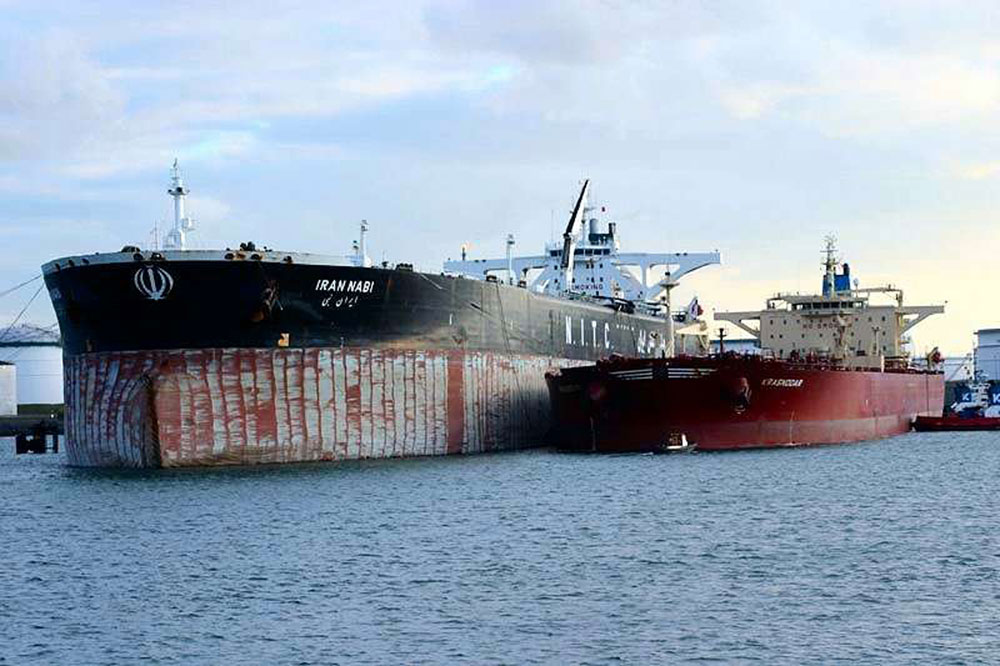
Iran's tanker problem

By Donald Sensing

Iran Is Ready To Flood The World With Oil

Iran reportedly has about 50 million barrels of oil floating off its coast in Iran-owned tankers, about half of which departed for Asian ports this month.


The problem for Iran is that it has no more than 60 tankers in its fleet. About half of them are parked for storage and another 20 or so are not seaworthy, at least not for sailing the open oceans. So all Iran has to do is rent foreign-flagged tankers, right?
There is just one problem: nobody wants to give their spare tanker capacity to Iran.

According to Reuters ship owners, who are not short of business in a booming tanker market, are unwilling to take Iranian cargoes.

One stumbling block is residual U.S. restrictions on Tehran which are still in place and prohibit any trade in dollars or the involvement of U.S. firms including banks – a major hurdle for the oil and tanker trades, which are priced in dollars.

As a result only eight foreign tankers, carrying a total of around 8 million barrels of oil, have shipped Iranian crude to European destinations since sanctions were lifted in January, according to data from the tanker-tracking source and ship brokers.
I beg you to pardon me for a moment while I break down and cry that Iran can't make more billions of dollars to pay terrorists.

Furthermore, tanker companies are not standing in line waiting for Iranian bids.
Whether it is due to politics or simple business precautions, Paddy Rodgers, chief executive of leading international oil tanker company Euronav, said at present there was “no great urgency to do business in Iran”.

“There is not a premium to do business in Iran and there is plenty of other business – the markets are busy, rates are good. So there is no stress on wanting to do it,” he told Reuters. “I don’t really want to set up a euro bank account in Dubai in order to trade with Iran – that would crazy.”

Michele White, general counsel with Intertanko , an association which represents the majority of the world’s tanker fleet, said: “We have witnessed a reluctance by our members generally to return to Iranian trade given the prohibition on use of the U.S. financial system – essentially no U.S. dollars.”

One can almost smell Saudi intervention here, which we first described two weeks ago when we reported that not only has Saudi Arabia banned Iran from sailing in its territorial waters, but has taken proactive steps to slow Iran’s efforts at increasing oil exports, interfering with third parties and making Iran’s procurement of vessels virtually impossible.
And then they told me that Iran can't ship their oil anywhere!
Bookmark and Share

Monday, March 21, 2016

More oil, higher prices

By Donald Sensing

Here is a nifty chart that shows there is more oil, in raw capacity, in storage today than at any time since 1929.


And yet the spot-market price of oil is rising. USO is the symbol of US Oil fund, which tracks the spot price at a 1:1 ratio. Meaning that if the spot price rises by 2 percent, USO's price rises by 2 percent, too. Here is USO's one-month chart from Google Finance.


Oil spot trading is a futures market; contracts affecting today's price are for future delivery. The vast majority of traders are speculators, not buyers who actually want to take delivery of the oil. Since December, there have been massive inflows of dollars (oil is traded only in dollars) into speculative oil funds. These inflows have initially driven the funds' share prices higher, then those have dragged the spot-market oil contracts' prices up along with them. So in a real way, fund buyers expected the spot to rise so they decided to buy low. That made spot prices rise. A self-fulfilling prophecy.

That's not all that has made spot prices rise, of course. Over the last few months the US dollar has been intermittently devalued against other currencies. That means on the spot market that it takes more dollars to buy oil. Since oil is traded only in US dollars, a devalued dollar necessarily means the spot price has to go up.

But for investors or speculators who can stand the risk and suffer through the high volatility, it can be a very rewarding buy financially.

Bookmark and Share

Wednesday, February 17, 2016

Oil price historical data

By Donald Sensing

I do not know why this fascinates me, but it does. Here is an interactive chart of spot-market oil prices going back to the beginning of the 1950s. You can select time frames from within that period to examine price moves. People who trade commodities probably get a bigger kick out this than I do.

Crude Oil Price History Chart

And here is a chart showing the historical prices of oil in constant (current) dollars.


If you are interested in such things, the essay accompanying this chart is pretty interesting, too.

Update: Playing Crude Oil’s Inevitable Rebound

Bookmark and Share